Barangay Clearance in the Philippines: Complete Guide, Requirements, Process, Uses, Fees, Validity, and FAQs (2026 Updated)
Barangay Clearance is one of the most essential documents in the Philippines. Almost ery Filipino will need it at some point in their life, whether for employment, business, government transactions, or personal records. Despite being a basic document, many people still feel confused about its purpose, requirements, validity, and correct application process.
This complete and detailed guide explains everything you need to know about barangay clearance in simple and easy-to-understand language. Whether you are a first-time applicant, a student, a job seeker, or a business owner, this article will help you understand how barangay clearance works, why it is important, and how to get it without hassle.
What Is a Barangay Clearance?
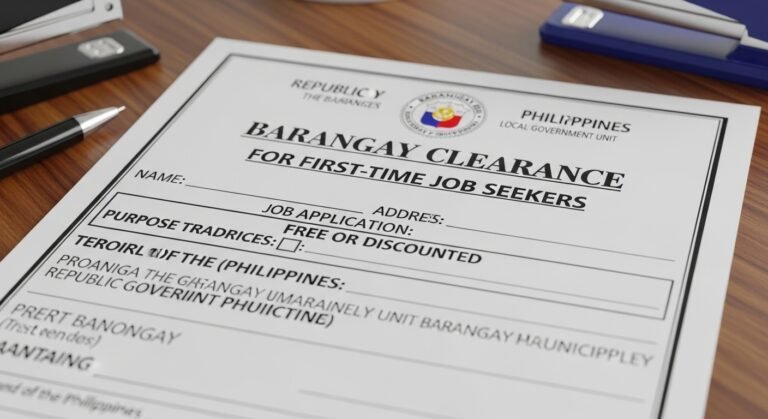
A barangay clearance is an official document issued by the barangay where a person currently resides. It certifies that the applicant:
- Is a resident of the barangay
- Has no pending complaints, disputes, or criminal records in the barangay
- Is known to the barangay officials as a member in good standing
This document serves as local proof of identity, residency, and good moral standing.
Barangay clearance is usually signed by the Barangay Captain (Punong Barangay) or an authorized barangay official and stamped with the official barangay seal.
Why Barangay Clearance Is Important
Barangay clearance is important because it acts as a foundation document for many legal, professional, and government transactions. It is often required before you can obtain other documents or approvals.
Key Reasons Why Barangay Clearance Is Required
- Confirms your identity and residency
- Shows you have no unresolved barangay-level cases
- Acts as a supporting document for higher government clearances
- Helps maintain peace and order within communities
Because barangays are the smallest local government units, they are the first level of verification for residents.
Common Uses of Barangay Clearance
Barangay clearance is required for many purposes. Below are the most common and important uses:
1. Employment Requirements
Most employers require a barangay clearance as part of the pre-employment documents, especially for:
- Local jobs
- Government positions
- Overseas employment processing
It proves that the applicant has no negative record in their community.
2. Police Clearance and NBI Clearance
Barangay clearance is often required before applying for:
- Police Clearance
- NBI Clearance
It acts as a supporting document confirming that the applicant has no local disputes or criminal complaints.
3. Business Permit and Registration
If you plan to open a small business, sari-sari store, or home-based business, barangay clearance is required for:
- Barangay Business Clearance
- Mayor’s Permit
- DTI or SEC registration support
Local governments require barangay clearance to ensure the business owner is a legitimate resident.
4. Government Transactions
Barangay clearance is required for various government services, including:
- Financial assistance programs
- Social welfare benefits
- Housing applications
- Scholarships
- IDs and certifications
5. School and Academic Purposes
Some schools require barangay clearance for:
- Enrollment
- Internship requirements
- Scholarship applications
- Student verification
6. Personal and Legal Purposes
Barangay clearance may also be required for:
- Loan applications
- Affidavits
- Travel documentation
- Court-related paperwork
Barangay Clearance Requirements
Requirements may vary slightly from one barangay to another, but most barangays require the following:
Basic Requirements
- Valid government-issued ID
- Proof of residency (if address on ID is different)
- Completed barangay clearance application form
- Barangay clearance fee
Accepted Valid IDs
- Philippine National ID
- Driver’s License
- Passport
- Voter’s ID or Voter’s Certification
- UMID ID
- School ID (for students, if accepted)
Additional Requirements (If Applicable)
Some barangays may also ask for:
- Cedula (Community Tax Certificate)
- Authorization letter (if representative is applying)
- Previous barangay clearance (for renewal)
Always check with your barangay office for specific requirements.
Step-by-Step Process to Get a Barangay Clearance
Getting a barangay clearance is usually simple and fast if you follow the correct steps.
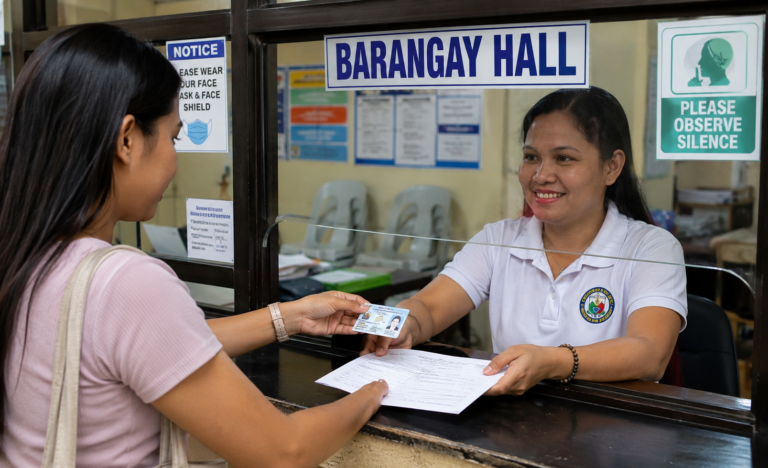
Step 1: Visit Your Barangay Hall
Go to the barangay hall where you currently live. Make sure to visit during official office hours.
Step 2: Request an Application Form
Ask the barangay staff for a barangay clearance application form. Some barangays may ask you to verbally provide your information instead.
Step 3: Fill Out the Required Information
You will usually need to provide:
- Full name
- Complete address
- Date of birth
- Purpose of barangay clearance
Make sure all details are accurate.
Step 4: Submit Requirements for Verification
Barangay staff will check:
- Your residency status
- Any existing complaints or records
- Your identification documents
Step 5: Pay the Barangay Clearance Fee
Proceed to the cashier or barangay treasurer and pay the required fee.
Step 6: Receive Your Barangay Clearance
In most cases, barangay clearance is released on the same day. Some barangays release it within minutes.
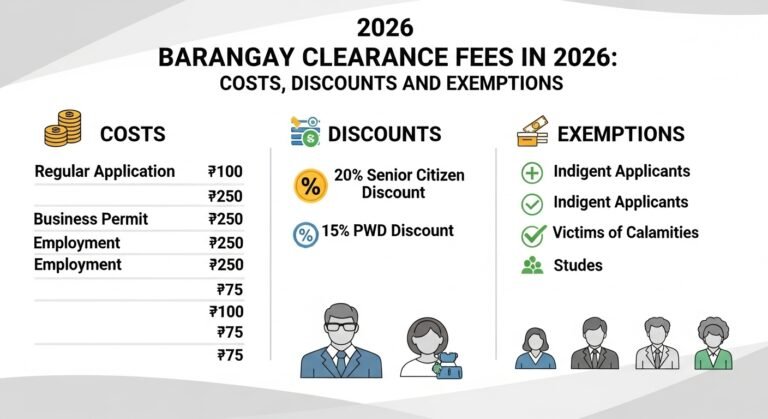
How Much Is the Barangay Clearance Fee?
The cost of barangay clearance depends on location and purpose. Typical fees range from:
- ₱20 to ₱50 – personal use
- ₱50 to ₱100 – employment or business use
Free Barangay Clearance
Some barangays offer free issuance for:
- Senior citizens
- Indigent residents
- Students (for school purposes)
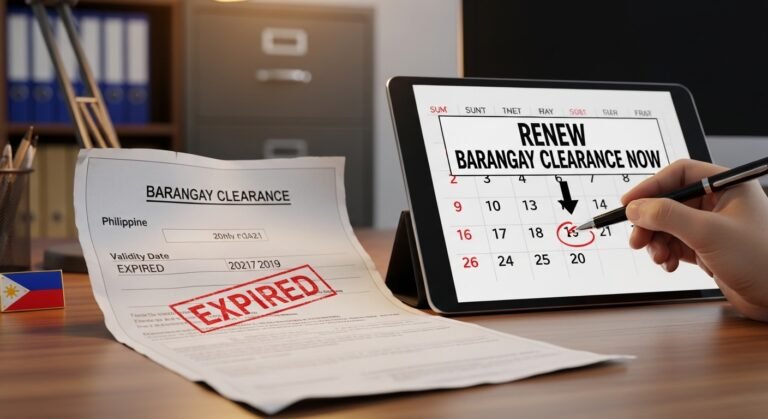
Barangay Clearance Validity Period
Barangay clearance is not valid permanently.
Typical Validity
- 3 months – most common
- 6 months – depending on barangay policy
- Shorter validity for specific purposes
Always check the validity date before submitting your clearance.
Difference Between Barangay Clearance and Barangay Certificate
Many people confuse these two documents.
Barangay Clearance
- Confirms good moral standing
- Used for employment, police clearance, and legal purposes
Barangay Certificate
- Confirms residency or specific facts
- Used for proof of address or community membership
They serve different purposes and are not interchangeable.
Barangay Clearance for First-Time Applicants
First-time applicants should:
- Bring a valid ID
- Be prepared to confirm residency
- Ask barangay staff about processing time
- Clearly state the purpose
Barangay Clearance Renewal
Renewal is required once the clearance expires.
Renewal Process
- Visit barangay hall
- Submit expired clearance
- Update personal information
- Pay renewal fee
Renewal is usually faster than first-time application.
Common Problems and How to Avoid Them
Incorrect Address on ID
Solution: Bring proof of residency
Missing Purpose
Solution: Clearly state why you need the clearance
Outstanding Barangay Issue
Solution: Resolve complaints before applying
Tips for Fast and Smooth Processing
- Visit early in the morning
- Bring exact payment
- Dress appropriately
- Be polite to barangay staff
- Keep photocopies of documents
FAQs
Q1: Can I apply in another barangay?
Ans: No. You must apply in the barangay where you currently reside.
Q2: Can someone apply on my behalf?
Ans: Yes, with authorization letter and valid IDs.
Q3: Is barangay clearance required for minors?
Ans: Usually no, unless required for school or legal purposes.
Q4: Can I use expired barangay clearance?
Ans: No. Expired clearance is not accepted.
Conclusion:
Barangay clearance is one of the most important local government documents in the Philippines. Understanding its purpose, requirements, and process helps save time, avoid stress, and complete transactions smoothly.
Whether you need it for work, business, or government services, knowing how to properly apply for barangay clearance ensures a fast and hassle-free experience.