Barangay Certificate Requirements in the Philippines (2026 Guide)
If you need a barangay certificate, bring one valid ID, something that proves your address, and a small fee — usually under ₱150. That covers roughly 80% of counters nationwide. The other 20% is where people get tripped up, because the Philippines runs on 42,000-plus barangays, and no two front desks operate exactly the same way.
Getting a barangay certificate comes down to meeting a short list of barangay certificate requirements — the right ID, proof of address, and a small fee.
There’s a reason this document trips people up more than it should. It looks like a form you fill out and forget. In practice, its rules are set locally, by ordinance, office by office — so the “requirements” you read online are really a composite of thousands of slightly different local habits.
This piece separates what’s actually fixed by law (like the jobseeker fee waiver) from what’s just common practice that varies by barangay.
Certificate, Clearance, or Indigency Know Which One You’re Asking For
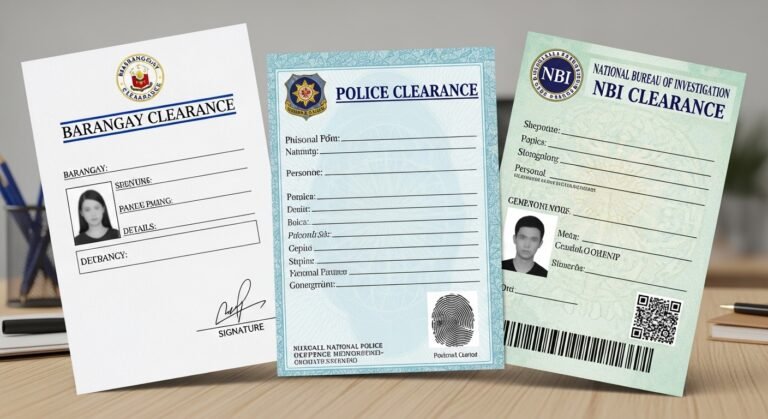
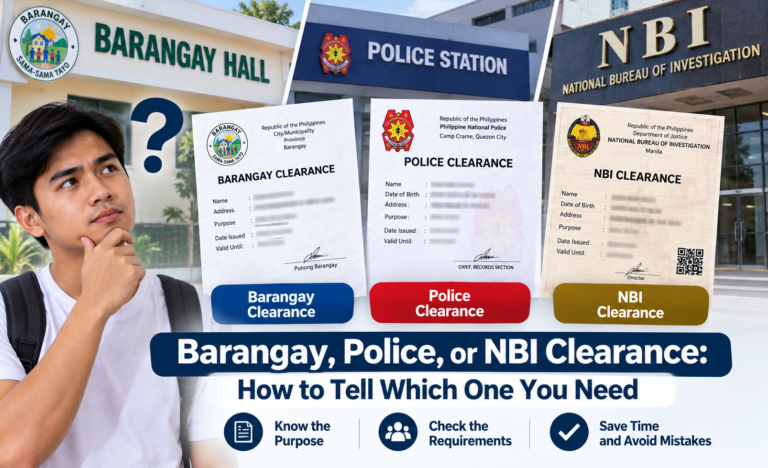
People use “barangay certificate” as a catch-all term, but the counter staff issue at least three different documents under that umbrella, and mixing them up is the #1 cause of wasted trips.
A Certificate of Residency does one job: it says you live where you say you live. A Barangay Clearance does two jobs — it confirms your address and states you have no pending blotter or dispute on file. A Certificate of Indigency is unrelated to address entirely; it certifies limited income, and barangays sometimes cross-check it against DSWD’s Listahanan before signing.
Banks tend to want the first one. HR departments almost always want the second. DSWD programs, PAO legal aid, and Malasakit Center assistance want the third.
Quick comparison: A residency certificate suits address verification because that’s its entire scope. A clearance suits pre-employment screening because it adds a conduct check. The dividing line is simple one confirms where you are, the other confirms how you’ve behaved there.
What You Actually Need to Bring
Strip away the local variation, and the core list barely changes from barangay to barangay:
| Item | What Counts | How Strict Is This? |
|---|---|---|
| Valid ID | PhilSys ID/ePhilID, passport, driver’s license, UMID, voter’s ID | Almost always required, no exceptions |
| Proof you live there | Lease, utility bill, barangay ID, employer certificate | Sometimes waived if officials already know you |
| Cedula (Community Tax Certificate) | Current year only | Required more often for clearances than for plain residency certs |
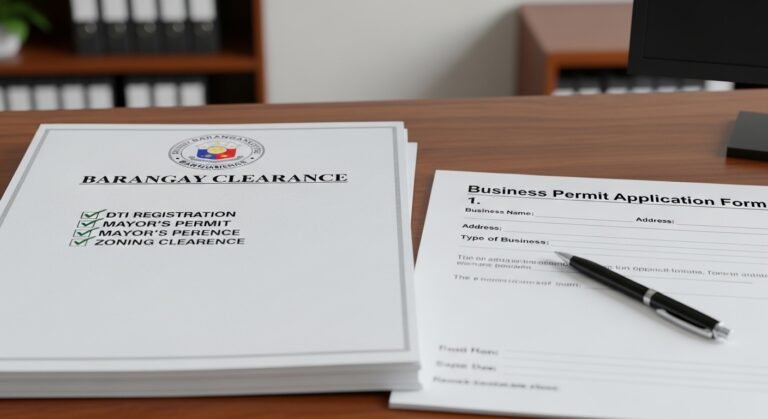
| Filled-out application form | Provided at the hall, or downloadable in some cities | Universal |
| Fee | ₱50–₱150, by local ordinance | Waived for indigents and eligible first-time jobseekers |
Every barangay operates under general DILG guidance on local records and certifications, but the specifics whether a utility bill is enough, whether a six-month residency minimum applies are decided at the barangay level. That’s the gap between what you’ll read in a “national checklist” and what actually happens at your specific counter.
Getting It Done: Walk-In vs. Online
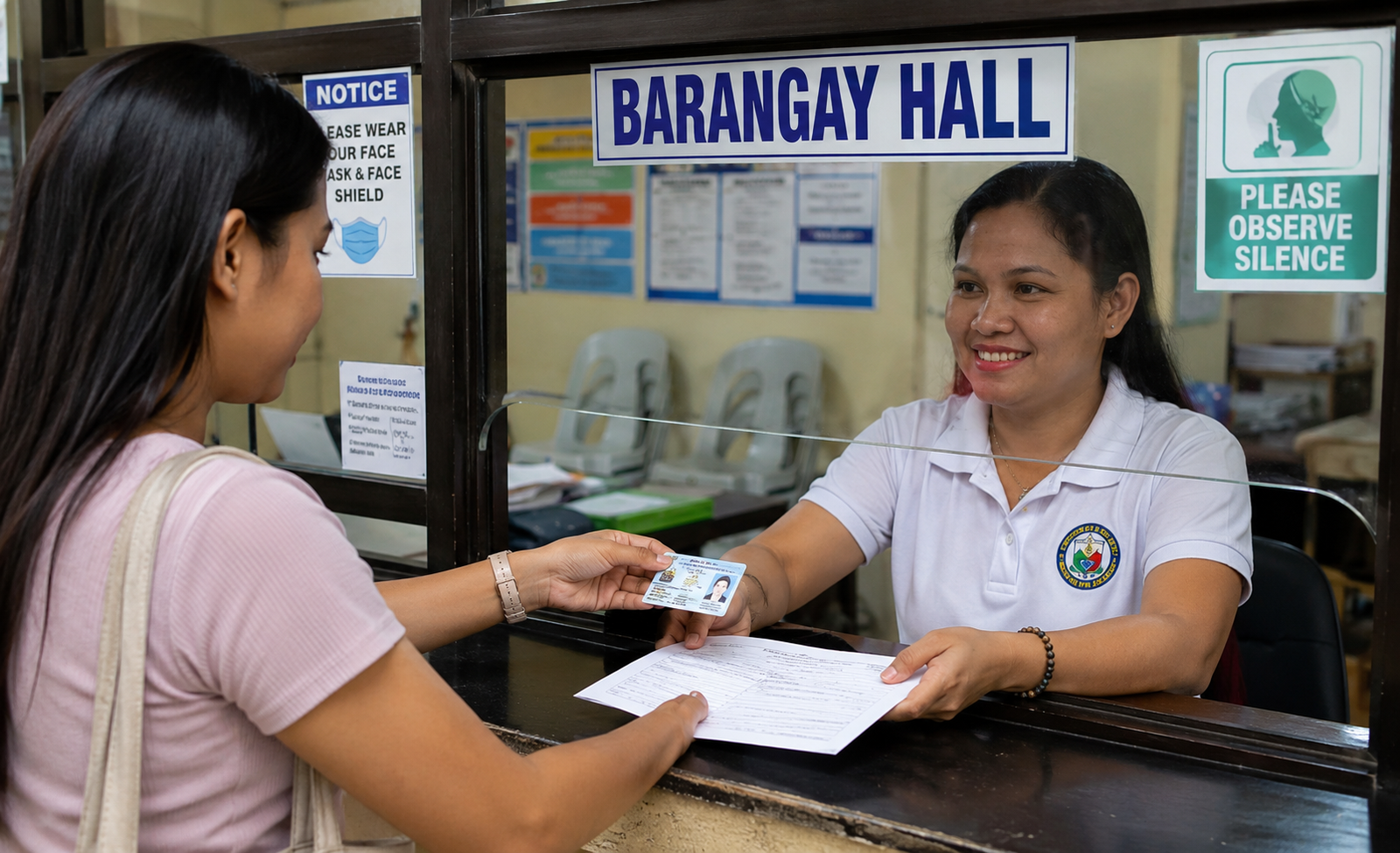
Here’s how the walk-in process runs in practice:
- Go to your barangay hall with a valid ID and proof of address.
- Ask for the application form and state your purpose clearly (job, school, bank, business).
- Fill it out, hand it back with your documents.
- Pay the fee at the window.
- Wait for the signature most halls finish same-day.
Bring a photocopy of everything. Not having one, and being sent to find a copier two blocks away, is a small thing that derails more applications than any missing document does.
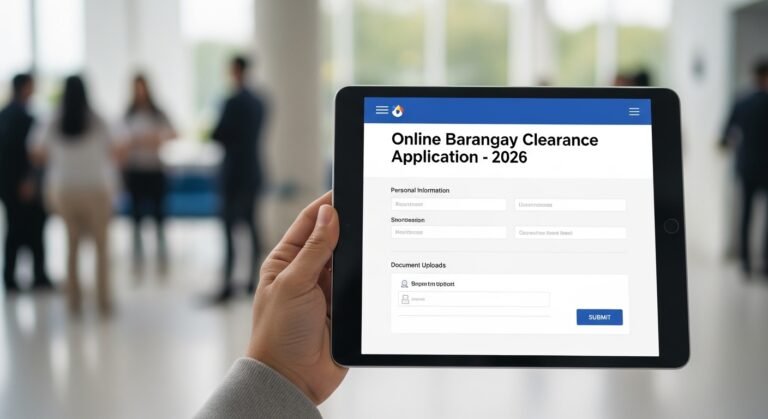
Online applications exist, but only in specific cities Quezon City, Makati, and Cebu currently run barangay e-service portals where you register an account, upload your ID, submit the form digitally, pay online, and either pick up the printed certificate or have it delivered. If your city isn’t on one of these systems yet, walk-in is your only real option, and that’s fine it’s still the faster path for most people anyway.
Sending someone in your place? They need a signed authorization letter, a copy of your ID, and their own ID. Skip any of those three and the application usually gets rejected on the spot.
The First-Time Jobseeker Exemption (RA 11261) Don’t Pay If You Don’t Have To
This is the part most guides bury or skip entirely, and it costs people money they didn’t need to spend.
Republic Act 11261 waives government fees barangay certification included for Filipinos applying for their first job ever. To use it, you generally need six months of residency in the barangay, a written declaration (an Oath of Undertaking) confirming you’re a genuine first-timer, and no prior use of the benefit. Once verified, the barangay issues a First-Time Jobseeker Certification for free, good for one year from issuance.
One catch worth knowing: the waiver covers one copy, one time. Lose it, and the reissue gets charged at the regular rate the exemption doesn’t reset.
Fees and How Long It Takes
Expect ₱50 to ₱150, set by whatever ordinance your city or municipality has passed. I’ve seen barangay pages list flat ₱50 fees and others charge closer to ₱150 for the same document; my best read is that this tracks local ordinance more than any single national rate, so don’t treat any number you see online as fixed.
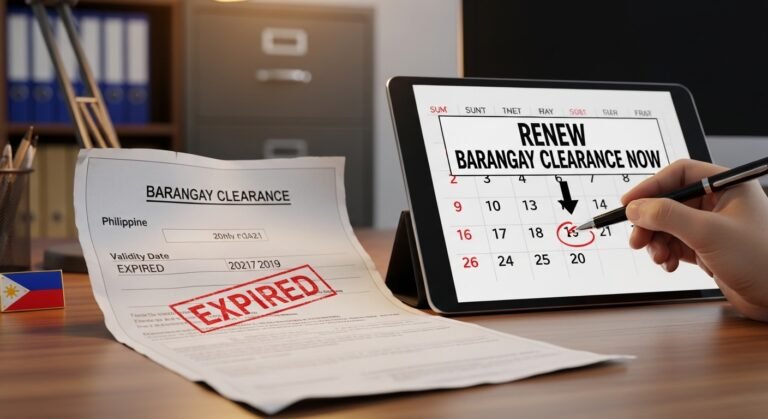
Processing is typically same-day often within the hour if the barangay captain or an authorized signatory happens to be at the hall when you arrive. Validity generally runs six months, but double-check with whoever’s receiving it. Banks and the DFA sometimes want something issued within the last one to three months, six-month validity on paper notwithstanding.
Why Applications Get Bounced
Rejections rarely come from anything complicated. The pattern is almost always one of these: an ID without a current address on it, no photocopy on hand, an expired cedula, or a representative missing the authorization paperwork. Some barangays also enforce a minimum residency period six months to a year is common before they’ll certify anyone as a resident at all.
Subdivisions with a homeowners’ association sometimes add their own extra step: an HOA clearance before the barangay will process anything. That’s not written into any national rule. It’s a local add-on, and a phone call ahead saves the trip.
What This Guide Doesn’t Cover
This is focused on residency certificates, clearances, and the jobseeker exemption. It doesn’t go deep on indigency certificate requirements, business permit clearances, or the separate paperwork trail for overseas employment each of those has enough local nuance to warrant its own breakdown.
Frequently Asked Questions
Q: I don’t have a utility bill in my name what else proves residency?
A: A lease contract, barangay ID, or employer certificate showing your address usually works. Some barangays also accept a notarized affidavit of residency as a fallback.
Q: I just moved can I still get a certificate right away?
A: Bring your ID and proof of the move (lease or deed), but expect some barangays to require a minimum residency period before they’ll certify you.
Q: Clearance or certificate of residency for a job application?
A: Check what the employer actually listed. “No derogatory record” language means they want a clearance; plain address verification means a residency certificate will do.
Q: Why did one barangay ask for a cedula and another didn’t?
A: That’s a local ordinance decision, usually tied to whether you’re requesting a clearance versus a plain residency certificate not a fixed national requirement.
Q: Is it ever faster to apply online than in person?
A: Only if your city runs a barangay e-service portal currently Quezon City, Makati, and Cebu. Everywhere else, walk-in is still quicker.
Conclusion
A barangay certificate isn’t complicated it’s just local. Bring a valid ID, proof of address, and a small fee, and most applications clear the same day. The real skill is knowing which document you need before you walk in, and whether RA 11261 means you shouldn’t be paying at all. Get those two things right, and the barangay hall stops being a hassle and turns into a ten-minute stop.