Barangay Clearance Fees in 2026: Costs, Discounts, and Exemptions
Whether you are applying for a first job, securing a business permit, or preparing documents for the NBI or police clearance, a barangay clearance is one of the most commonly required certificates in the Philippines. But many people wonder:
- How much does a barangay clearance cost in 2026?
- Are there discounts or exemptions available?
- Can certain groups get it for free?
This article gives you a clear, updated, and practical guide to barangay clearance fees in 2026, including how costs are set, who qualifies for discounts, and how to legally request exemption.
What Is Barangay Clearance? (Quick Review)
A barangay clearance is an official document issued by the local barangay (village or community government) certifying:
- Your residency in the barangay
- Your community standing
- That you have no unresolved local disputes, if applicable
It is often required for:
- Employment background checks
- Business permit applications
- NBI and police clearance processing
- School requirements
- Bank transactions and loans
- Travel or immigration documentation
Because it serves as a local proof of identity and conduct, most government offices and private institutions require it as a baseline document before other clearances are issued.
How Barangay Clearance Fees Are Set
Barangay clearance fees are not fixed nationwide. Instead, they’re usually:
- Set by the Barangay Council (Sangguniang Barangay)
- Guided by local ordinance approved by the municipal or city government
- Based on Philippine laws on local revenue and fees
In other words, each barangay may have slightly different costs depending on:
- Local policies
- Purpose of clearance
- Whether discounts are allowed
- Administrative priorities
Despite variation, most barangays follow similar ranges, and many categories of fee waivers are supported by law or common practice.
Typical Barangay Clearance Costs in 2026
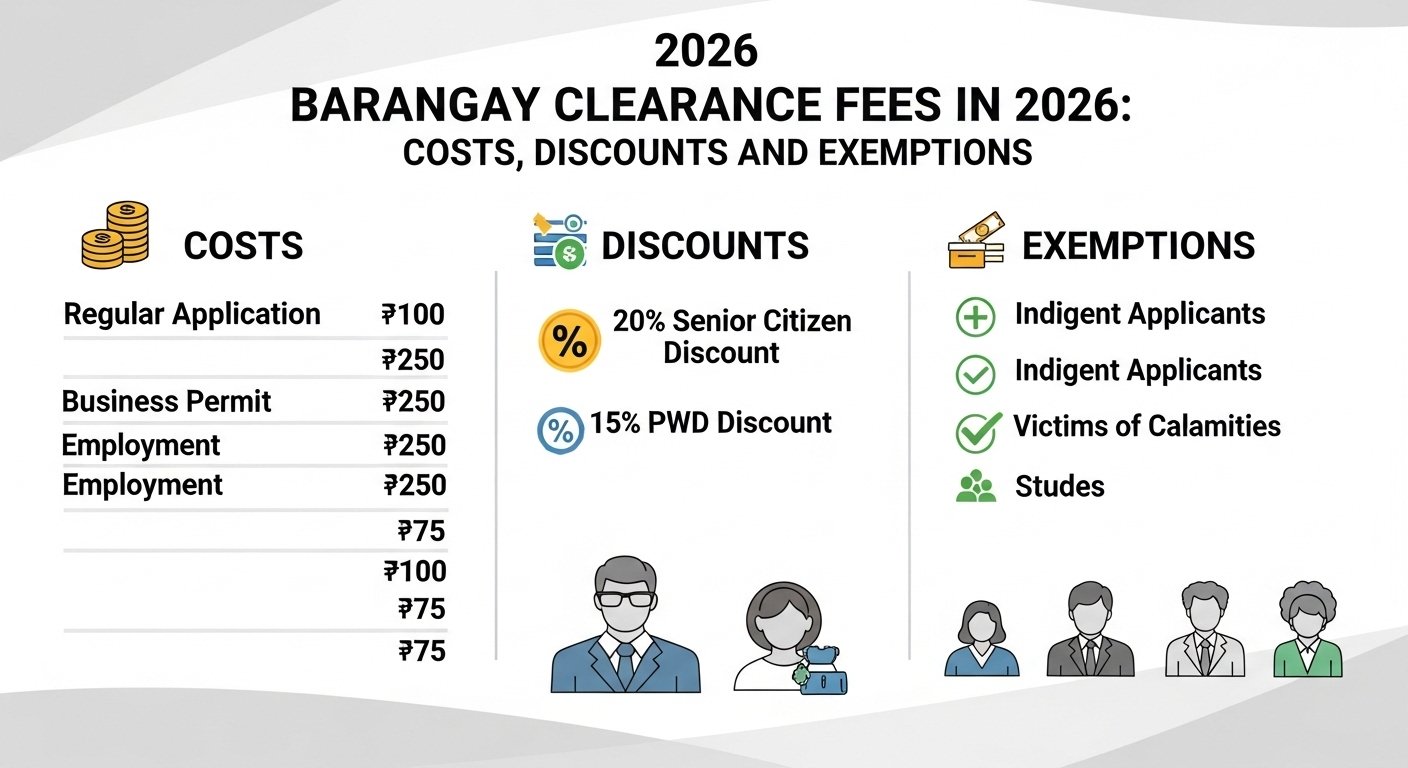
While specific amounts may vary by city or municipality, most barangay clearance fees in 2026 fall into these typical ranges:
Average Fee Range
| Purpose | Approximate Cost (2026) |
|---|---|
| Personal use (employment, school, bank) | ₱30 – ₱150 |
| Business application | ₱100 – ₱250+ |
| Multiple-copy issuance | ₱50 – ₱100 per extra copy |
| Online or mobile payments (where available) | Convenience charges may apply |
Example Interpretation
- In many barangays, a personal barangay clearance costs around ₱50 – ₱100.
- For business purposes, some barangays charge slightly higher due to added processing.
- Extra copies after your first one are usually charged separately.
Important: These ranges are general estimates based on current trends and local government practices; actual amounts depend on your barangay’s official ordinance.
Are Barangay Clearance Fees the Same Everywhere?
No. Fees differ by barangay, but common factors that influence costs include:
Local revenue policies
Administrative overhead
Whether the clearance is for business or personal use
Whether additional services (e.g., photocopying, certification fees) are included
Some cities standardize fees for all barangays, while others give flexibility to barangay councils.
Discounts and Exemptions: Who Pays Less (or Nothing)?
Many barangays provide discounts or fee exemptions for certain groups. These are usually specified in local ordinances and often supported by national policy.
Here are the most common categories eligible for discounts or exemptions:
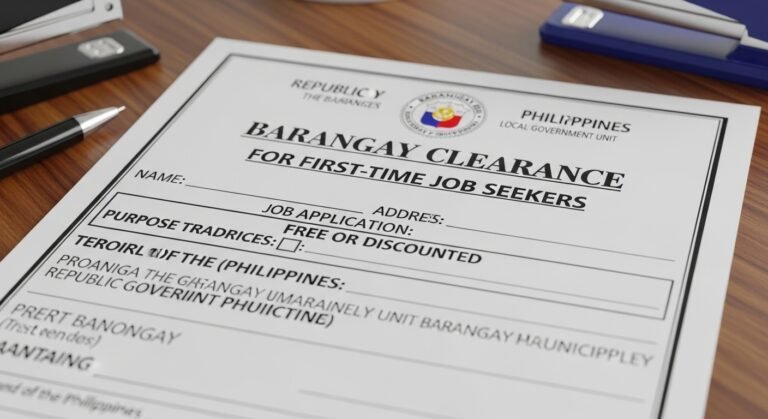
1. Students and First-Time Job Seekers
Many barangays waive clearance fees for:
Students applying for their first job
Applicants presenting a student ID
First-time job seekers with proof of eligibility
This encourages youth employment and removes financial barriers for young workers.
2. Senior Citizens
Under the Expanded Senior Citizens Act (RA 9994):
Senior citizens are generally exempt from certain local fees,
Including barangay clearance fees, where local ordinances allow.
Local barangays often adopt ordinances to formalize this exemption.
3. Persons with Disabilities (PWDs)
Barangays often grant:
Discounts or exemptions for PWD applicants
Proof usually required (PWD ID or certification)
This aligns with national disability protections and inclusive local governance.
4. Indigent Residents
Barangays may offer fee waivers for individuals who can prove:
Financial hardship
Low-income status
Certification of indigency issued by local government
Many barangays have specific provisions for supporting indigent residents.
5. Solo Parents or Low-Income Families
Some local governments extend benefits to:
Solo parents
Household heads under a certain income threshold
These waivers vary by city and municipality depending on local policies.
6. Community Service Volunteers & Youth Leaders
Certain barangays provide fee incentives for residents who are:
Active youth council members
Community volunteers
Barangay service participants
This is less common but becoming more frequent in active communities.
What Proof Is Typically Required for Discounts or Exemptions?
To qualify for reduced fees or exemptions, applicants may be asked to present:
Valid government-issued ID
Student ID (for students)
Senior citizen ID
PWD ID
Certificate of Indigency / Income Declaration
Official barangay certification or endorsement letter
Always ask your barangay ahead of time to confirm the specific documents required for your fee status.
Sample Barangay Clearance Fee Structure (Illustrative)
This is a hypothetical example of how a barangay might structure its fees:
| Category | Fee (Example) | Notes |
|---|---|---|
| Personal clearance | ₱80 | Standard rate |
| First-time job seeker (student) | ₱0 | Free with student ID |
| Senior citizen | ₱0 | Senior citizen ID |
| PWD | ₱0 | PWD ID required |
| Indigent resident | ₱0 | Certificate of Indigency |
| Business clearance | ₱150 | For business permit support |
| Additional copies | ₱50 per copy | Applies after first copy |
This table represents a fair common pattern, but your barangay’s actual fees may differ.
Can Barangays Charge Extra Fees?

Barangays may include additional items such as:
Photocopy fees
Certification or annotation fees
Administrative charges
Processing fees for special purposes
However, they must disclose them transparently in local fee ordinances. Hidden or unofficial charges are improper and should be reported.
How to Legitimately Ask for a Discount or Exemption
To ensure your fee waiver request is handled properly:
Step 1: Visit Your Barangay Hall
Go in person during office hours.
Step 2: Bring Required IDs
Include any supporting IDs or certificates for qualification.
Step 3: Inform the Staff Politely
State your intention clearly:
“I am applying as a first-time job seeker and would like to request the student fee exemption for barangay clearance.”
Step 4: Ask for a Written Fee Assessment
Ask for an official receipt or breakdown.
Step 5: Keep Documentation
Save your receipt, application form, and clearance copy for future reference.
Common Mistakes to Avoid
Assuming all barangays follow the same fee schedule
Not asking about discounts or exemptions
Not bringing proper qualifying documents
Waiting until the last minute to request clearance
Why Knowing the Fees Matters
Understanding barangay clearance fees helps you:
Budget wisely for government requirements
Avoid unnecessary delays
Maximize lawful discounts
Know your rights as an applicant
Prepare proper documentation
Whether you’re a student, worker, business owner, or resident planning other applications, knowing fee expectations gives you confidence and peace of mind.
Conclusion
Barangay clearance fees in 2026 vary depending on location, purpose, and local policies. Most barangays charge a nominal fee for personal clearances, while business purposes may be slightly higher. Fortunately, many groups qualify for discounts or fee waivers, such as students, senior citizens, persons with disability, indigent residents, and community volunteers.
Always check your specific barangay’s fee ordinance, bring the correct documentation, and politely inquire about available exemptions. Being prepared ensures you get your barangay clearance quickly, affordably, and without unnecessary stress.