Barangay Clearance for OFWs: How to Apply From Abroad (2026 Guide)
Working overseas doesn’t stop Philippine paperwork from following you home. Many Overseas Filipino Workers are surprised to learn that a barangay clearance is still required for several transactions back home, from renewing legal documents to helping family members with business or travel requirements. This guide explains how an OFW can secure a valid barangay clearance without flying home, what documents are needed, and how to avoid common delays.
Why OFWs Still Need a Barangay Clearance
A barangay clearance certifies that a resident has no derogatory record within their barangay of residence. Even while working abroad, this document keeps its value because many government agencies, banks, and private companies in the Philippines still ask for a current barangay clearance before processing an application. Skipping it can stall an otherwise straightforward transaction back home, which is why many overseas workers coordinate the process with a trusted representative rather than leaving it until their next vacation.
When an OFW Actually Needs a Barangay Clearance
Not every OFW needs a barangay clearance every year, but certain transactions almost always require one. Common situations include:
- Renewing a Philippine passport or applying for dual citizenship documents
- Processing a loan, mortgage, or bank account for family back home
- Buying, selling, or transferring property while overseas
- Supporting a visa or immigration application that requires proof of good standing
- Enrolling children in school or processing scholarship paperwork
- Renewing or applying for a business permit tied to a family enterprise
- Executing a Special Power of Attorney for a representative in the Philippines
Can You Apply Without Being Physically Present?
Most barangay halls still expect the applicant to appear in person, since a barangay clearance is essentially a character reference tied to residency. OFWs are not physically barred from getting one, though. The common workaround is deputizing a trusted representative, usually a spouse, parent, or adult child, through a notarized authorization letter or Special Power of Attorney. Some barangays now also accept verified online or emailed requests, especially for a straightforward renewal where the applicant already has a record on file. Always call the barangay hall or check its official social media page first, since procedures vary from one barangay to another.
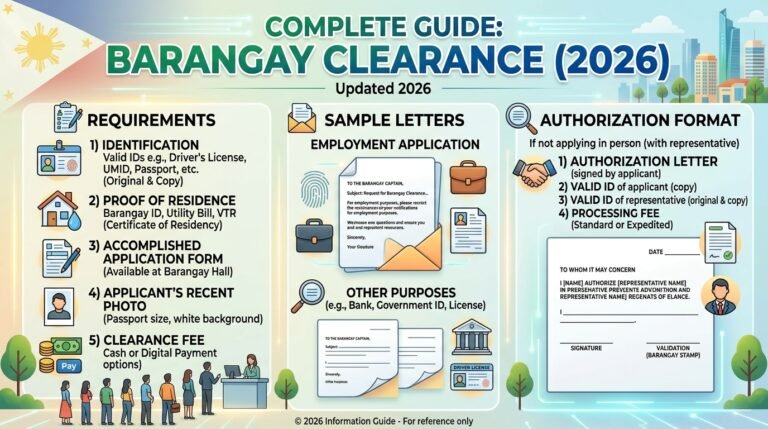
Requirements When Applying Through a Representative
A representative-filed application generally needs the following on hand:
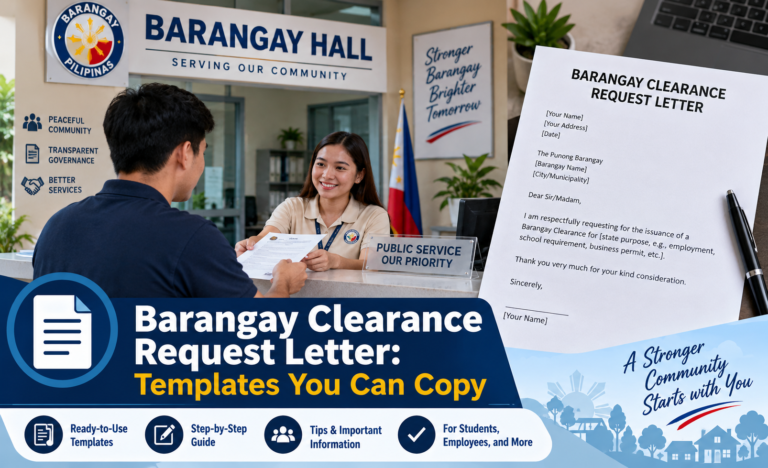
- Notarized authorization letter or Special Power of Attorney naming the representative
- Photocopy of the OFW’s valid government-issued ID, such as a passport, driver’s license, or UMID
- Original valid ID of the representative
- Proof of residency, such as a lease contract, utility bill, or barangay ID
- Recent 1×1 or 2×2 photo, if required by the barangay
- Cedula (Community Tax Certificate), which the representative can secure at the same hall if the OFW does not already have one
- Payment for the clearance fee, usually handed to the representative in cash or sent through remittance beforehand
Step-by-Step: How an OFW Can Get a Barangay Clearance From Abroad
- Prepare a Special Power of Attorney or authorization letter, ideally signed and notarized at the Philippine Embassy or Consulate nearest you
- Send the notarized document, along with scanned copies of your valid ID, to your representative in the Philippines
- Have your representative bring the documents, their own ID, and proof of your residency to the barangay hall
- Complete the application form on your behalf and pay the clearance fee at the cashier
- Wait for the clearance to be processed, then have it scanned or couriered to you if you need a copy while abroad
How to Prepare a Valid Authorization Letter or SPA
A solid authorization letter or Special Power of Attorney should state your full legal name, passport number, current address abroad, the full name and relationship of your representative, the specific transaction being authorized, and the validity period of the authorization. If you are in a country that is part of the Apostille Convention, you can usually have the document apostilled locally instead of visiting the embassy, since apostilled documents are recognized in the Philippines without further authentication. If your country is not part of the convention, have the letter notarized and authenticated at the nearest Philippine Embassy or Consulate. It is worth preparing two or three certified copies, since some agencies keep the original on file.
Fees and How Payment Works
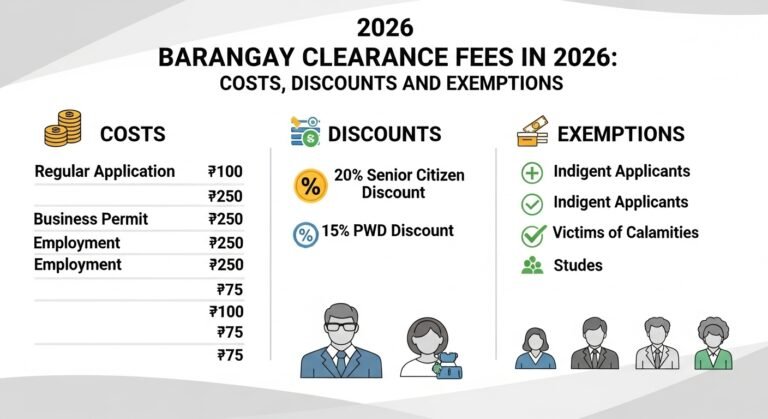
Barangay clearance fees are set by local ordinance, so the exact amount varies from one barangay to the next. Our detailed breakdown of typical costs, senior citizen and PWD discounts, and possible exemptions is available on our barangay clearance fees guide, which is worth checking before sending money to your representative. As a rule of thumb, keep a little extra on hand for incidental costs like documentary stamps, photocopying, or a certified true copy if you need more than one original.
Processing Time and Tips to Avoid Delays
A representative-filed clearance can often be released the same day, but delays are common when paperwork is incomplete. Keep these tips in mind:
- Confirm barangay-specific requirements by phone before sending documents overseas
- Have the Special Power of Attorney notarized early, since embassy appointments can take weeks to secure
- Ask your representative to confirm office hours, cashier payment methods, and whether appointments are needed
- Request a scanned copy immediately after release, in addition to mailing the physical original
- Keep a digital backup of every submitted document in case a transaction requires proof later
Frequently Asked Questions
Can I get a barangay clearance if I only have a scanned copy of my ID, not the original?
Most barangays accept a clear photocopy or printed scan of a valid ID as long as your representative also presents their own original ID and the notarized authorization letter. Some barangays may ask to see the original during a video call for extra verification.
Do I need to renew my barangay clearance every year while working abroad?
Only if you have an active transaction that requires a current clearance. Many OFWs simply request a fresh one whenever a specific need comes up, rather than renewing every year out of habit.
What if my representative is not a relative?
A non-relative can still act as your representative as long as the Special Power of Attorney clearly names them and the barangay is satisfied with the supporting identification. Some barangays may ask a few extra verification questions in this case.
Can I use a barangay clearance I got before I left the Philippines?
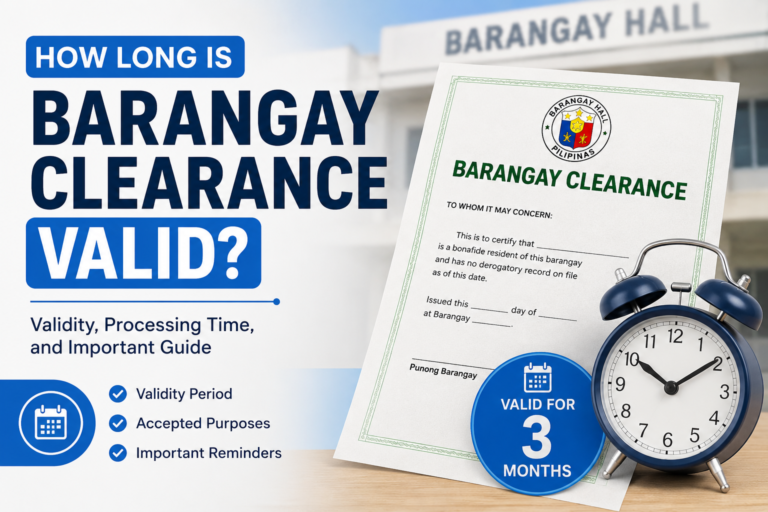
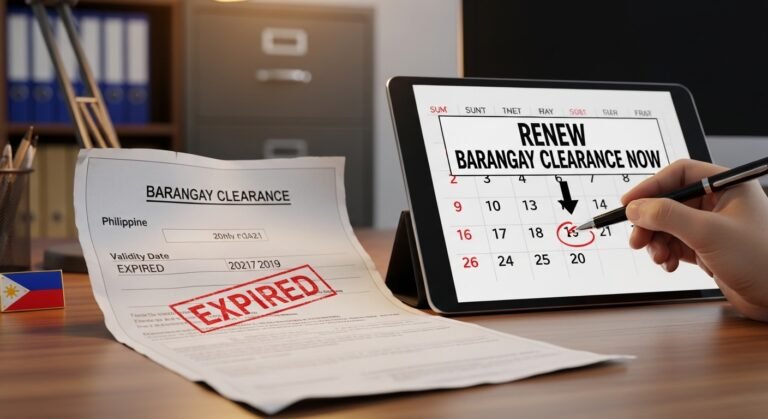
Only if it is still within its validity period, which is typically stated on the document itself or covered in our guide on barangay clearance validity and renewal. An expired clearance will need to be replaced before it can be used again.
Final Thoughts
Getting a barangay clearance while working overseas takes a bit more coordination than a simple walk-in visit, but it is entirely manageable with a properly notarized authorization letter and a reliable representative back home. Plan ahead, confirm your barangay’s specific process, and keep both digital and physical copies of every document you send. For a broader overview of the requirements and process that apply to every applicant, see our main barangay clearance guide.