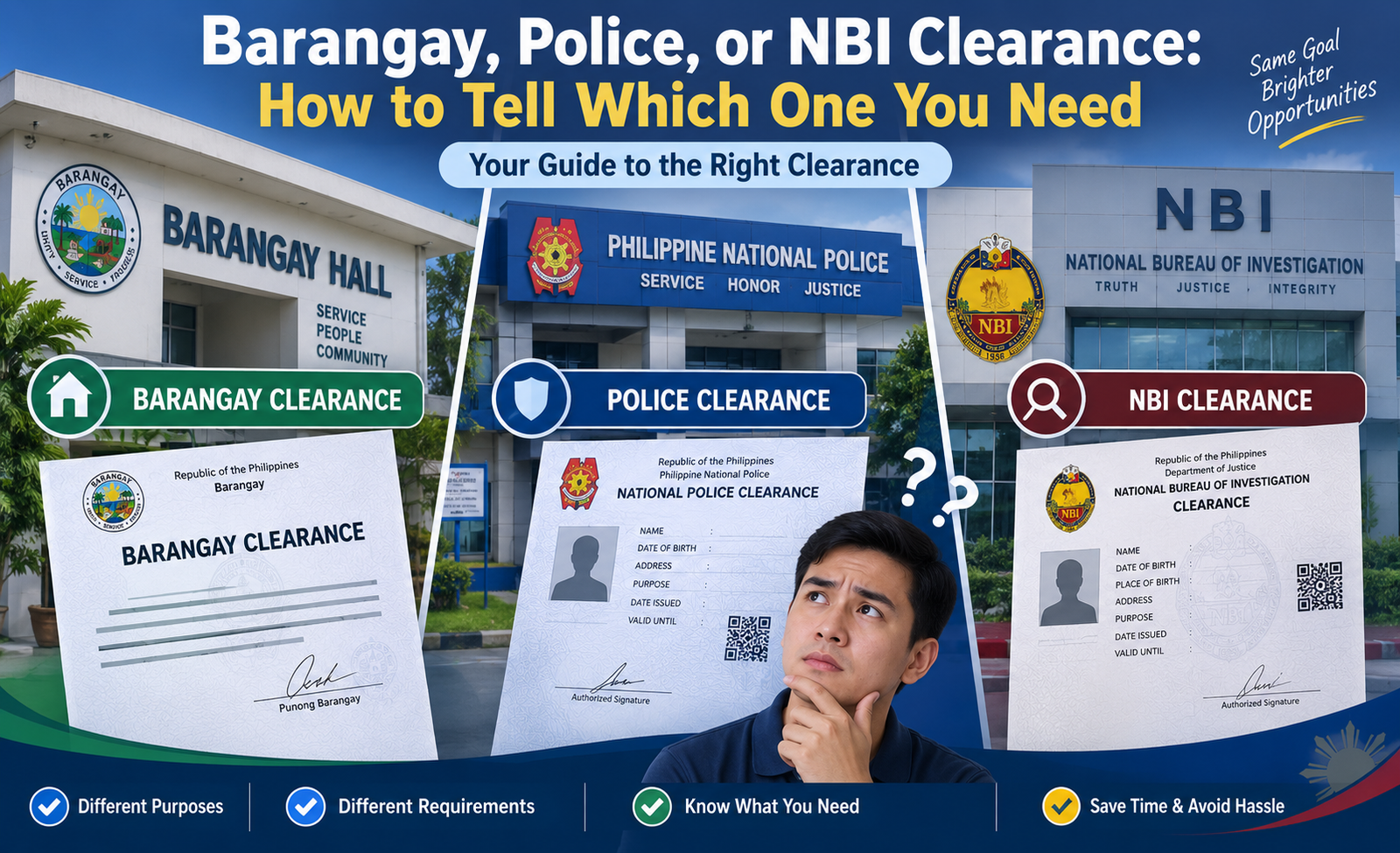
Barangay, Police, or NBI Clearance: How to Tell Which One You Need
A Barangay Clearance confirms your standing in one barangay. A Police Clearance checks your record with the local PNP station covering your city or municipality. An NBI Clearance searches the National Bureau of Investigation’s nationwide database. Each one covers a wider area and costs more than the one before it.
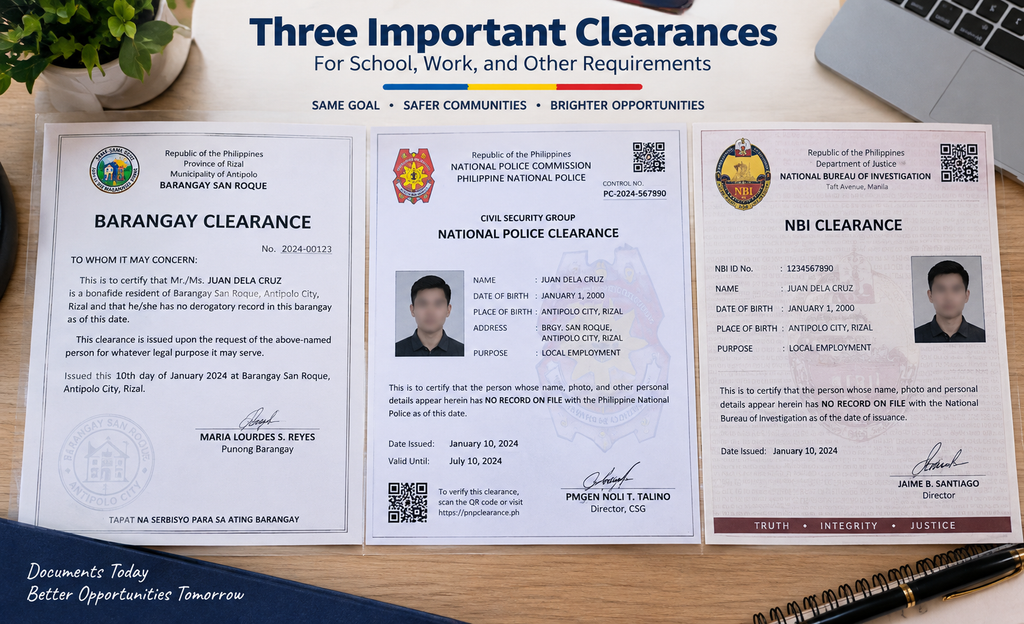
Look if you’re staring at a job application that just says “submit your clearance,” here’s what actually works: figure out who’s asking and why, then match that to the document built for that job. Guessing wastes a trip and a fee.
What Each Clearance Actually Checks
The three documents aren’t tiers of the same thing. They’re issued by three separate agencies, each checking a different slice of your record.
According to a 2026 comparison from PoliceClearanceOnlines.org, an NBI clearance is issued nationally and searches records across the entire Philippines, while a police clearance covers only the city or municipality that issued it, and a barangay clearance confirms nothing beyond your standing within a single barangay.
A 2026 side-by-side guide from Barangay Directory lists barangay clearance fees around ₱20 to ₱50 for personal use, police clearance around ₱150 to ₱180 once convenience fees apply, and NBI clearance at roughly ₱155 the pricing gap roughly mirrors how far each document’s verification actually reaches.
Here’s a detail most comparison guides skip entirely: a barangay clearance isn’t accepted as one of your two valid IDs when you’re applying for an NBI clearance. Most people assume the local document helps speed things along. It doesn’t the NBI wants government-issued ID only.
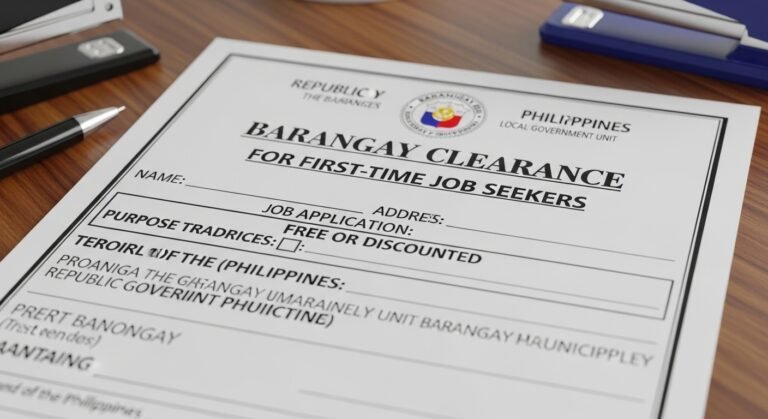
Barangay Clearance Requirements for First-Time Job Seekers: “waive your NBI and police clearance fees”
Side-by-Side: Cost, Validity, and Turnaround
Barangay clearance is the cheapest and fastest often ₱20 to ₱50 and ready the same day. Police clearance runs ₱150 to ₱180 with a same-week turnaround and covers only your city. NBI clearance costs around ₱155, takes a bit longer if flagged, but is the only one recognized nationwide and abroad.
According to the National Police Clearance System’s own FAQ, a police clearance normally stays valid for six months, while NBI clearance is generally recognized for a full year a gap that catches people who plan to renew paperwork just once a year instead of twice.
| Option | Best For | Key Benefit | Limitation |
|---|---|---|---|
| Barangay Clearance | Bank accounts, business permits, quick local needs | Cheapest and fastest, often issued the same day | Not valid as an ID for NBI processing, and no reach beyond the barangay |
| Police Clearance | Local job applications, tricycle or driver permits | Faster than NBI, includes biometric verification | Valid only within the issuing city or municipality |
| NBI Clearance | Overseas work, visas, employment with large companies | Nationwide database, accepted almost everywhere | Costs a bit more and takes longer if your name gets a “hit” |
Which One Your Situation Actually Needs
Most private and government jobs ask for NBI clearance, often alongside a barangay clearance as a secondary document — not a replacement. Working overseas or applying for a visa almost always means NBI clearance, frequently with a red ribbon or apostille attached, since foreign agencies want national-level verification, not a local one.
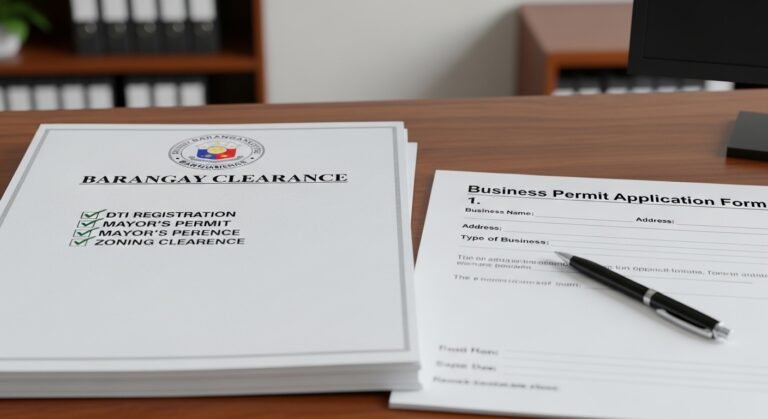
For smaller, local transactions, the requirement drops down a tier. Opening a bank account or applying for a business permit usually only needs barangay clearance and a valid ID. A tricycle or driver’s permit application typically wants barangay clearance plus a current cedula. Local employment, especially at smaller companies, sometimes accepts police clearance in place of NBI, though it’s worth confirming with the employer first.
You don’t need all three for most transactions figure out the actual destination of the document (an employer, an embassy, a bank) and that tells you almost everything.
How to Get Each One Step by Step
- Check which one your form or employer actually names don’t assume.
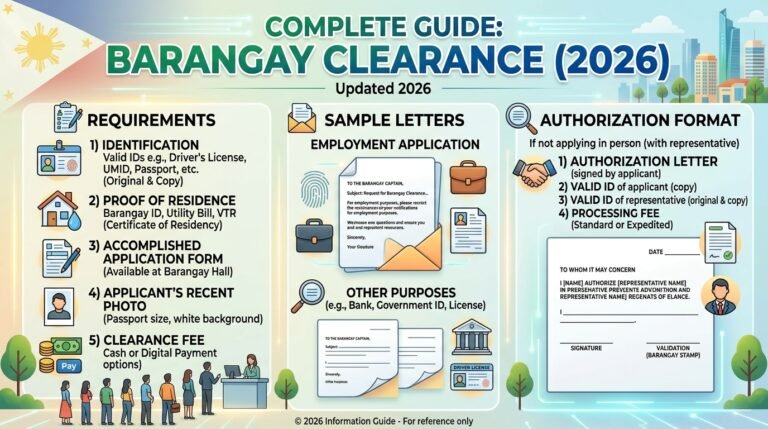
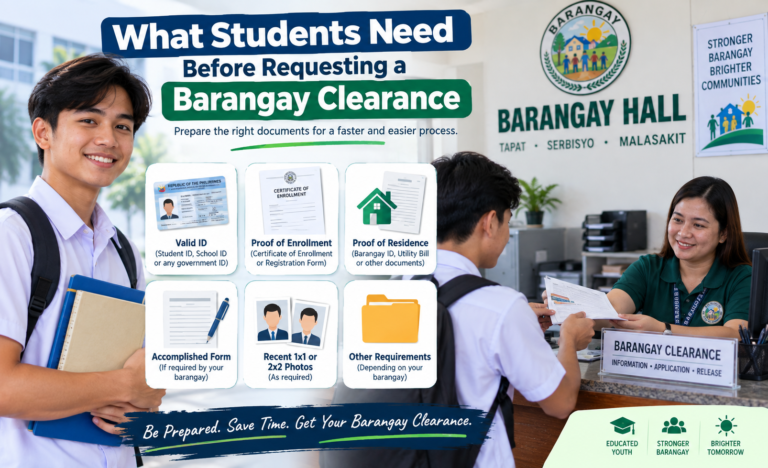
- For barangay clearance, go straight to your barangay hall with a cedula and ID.
- For police or NBI clearance, register online first and book an appointment.
- Pay the fee through the portal’s accepted payment channels.
- Show up for biometrics (police or NBI) and claim your clearance once cleared.
Barangay clearance
No appointment system, no biometrics just a form, a cedula, and a valid ID at the barangay hall itself.
Police clearance
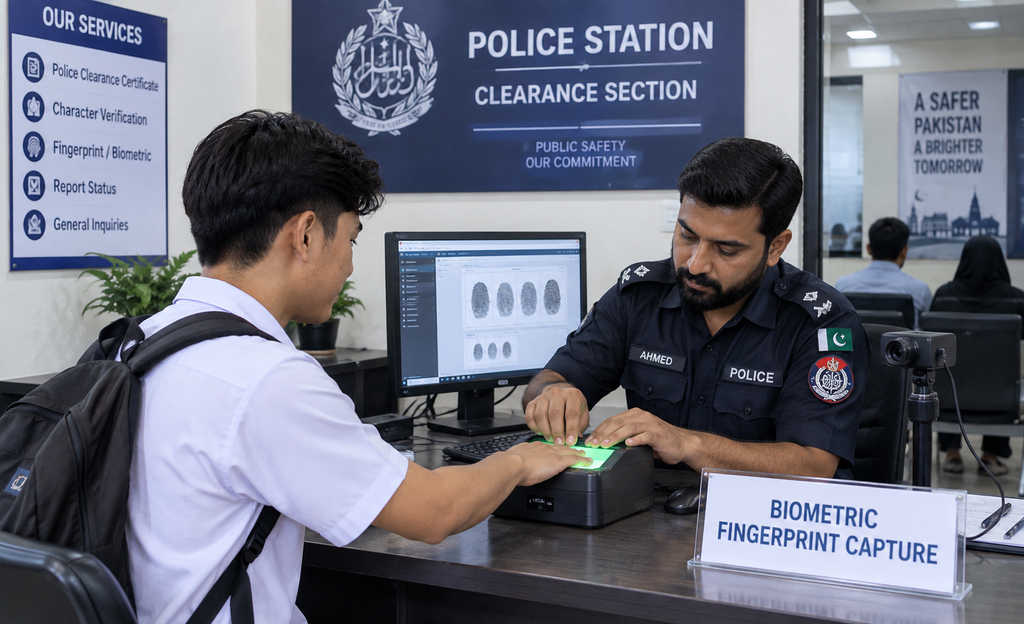
Applied for through the National Police Clearance System online, then completed in person with fingerprint capture at your chosen station.
NBI clearance
Registered through the NBI’s own online portal, scheduled for an appointment, and released the same day if your name comes back clear.
Mistakes That Get Applications Rejected
Submitting police clearance where NBI was required
Some guides argue police clearance is close to obsolete now that NBI has gone digital. That’s not quite right for tricycle permits, small local jobs, and first-time jobseeker fee waivers, police and barangay clearance still do jobs NBI simply doesn’t touch. But when the requesting party specifically names “NBI,” a police clearance won’t substitute, and the application typically gets bounced back.
Letting validity quietly lapse
It’s easy to forget that police clearance expires in six months while your NBI clearance from the same year is still technically good for another six. Track them separately, or you’ll end up renewing the wrong one at the wrong time.
Forgetting the barangay clearance’s ID limitation
If you’re a first-time jobseeker planning to use your barangay certificate to waive an NBI or police clearance fee, that’s fine — but don’t expect the barangay paper itself to double as identification once you’re at the counter.
National Police Clearance System official FAQ: confirms current fees, validity period, and first-time jobseeker fee waiver
Quick Answers to Common Questions
Can I use a barangay clearance instead of an NBI clearance?
No. They serve different purposes, and a barangay clearance isn’t even accepted as a valid ID when applying for an NBI clearance.
Which clearance do I need for a job abroad?
An NBI clearance, usually with a red ribbon or apostille attached, since embassies and POEA require nationwide-level verification.
How long is a police clearance valid?
Typically six months, while NBI clearance is generally accepted for a full year plan your renewals around the shorter one.
Do I need a barangay clearance before getting a police or NBI clearance?
Only if you’re a first-time jobseeker, since presenting one can waive the base fee under RA 11261.
Which clearance is cheapest and fastest to get?
Barangay clearance, usually ₱20 to ₱50 and ready the same day, since it involves no national database search.
Before You Apply
This compares the general rule for each document exact fees and processing times still vary by city, station, and barangay, so confirm specifics with whichever office you’re visiting. It’s built for someone deciding which document to get next, not for resolving a “HIT” status or a rejected application, which each have their own separate process.