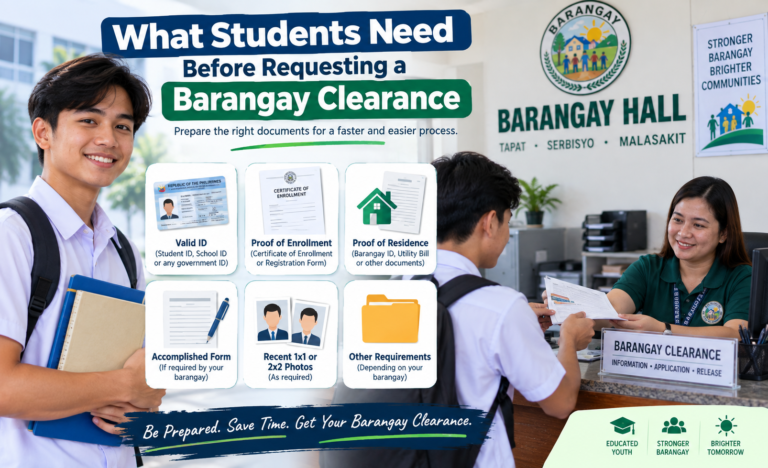
Barangay Clearance Fee in the Philippines: What’s Legal, and What’s Overcharging
Bbarangay clearance fee is the amount your barangay charges to issue the document, set through its own ordinance under the Local Government Code. There’s no fixed nationwide price personal fees usually run ₱20 to ₱100, business fees run higher, and qualified first-time jobseekers can get it free.
You don’t need to memorize a national price list there isn’t one. What’s worth knowing is what makes a fee legitimate in the first place, because that’s the part most guides skip straight past.
Why There’s No Fixed National Fee
Every barangay sets its own rate. That’s not a loophole it’s how the law is written.
According to a 2026 legal commentary from Respicio & Co., barangays derive their fee-charging authority from the Local Government Code of 1991, which lets them impose reasonable fees through a barangay ordinance or resolution, provided the amount is fixed, receipted, and consistent with the applicable fee schedule.
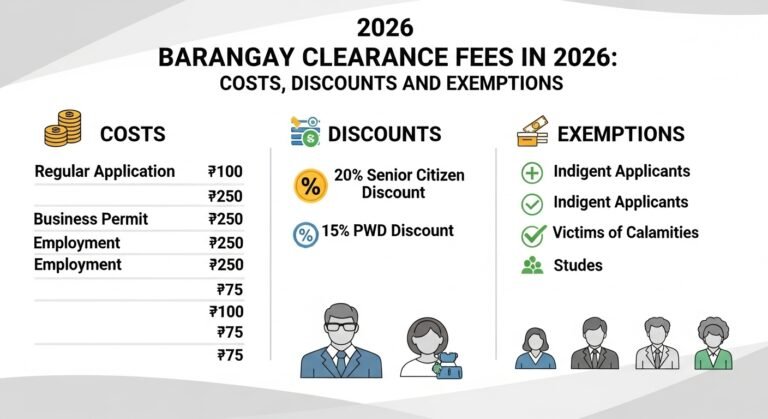
A 2026 guide from Barangay Directory notes personal barangay clearance for employment purposes typically costs ₱20 to ₱50, while business clearance often runs ₱200 to ₱1,000 or more depending on the size and classification of the business — a spread most fee guides understate, since two identical stores in different barangays can be charged completely different amounts.
So if your fee looks different from what a friend paid in another city, that’s usually not a mistake. It’s two different ordinances doing exactly what they’re allowed to do.
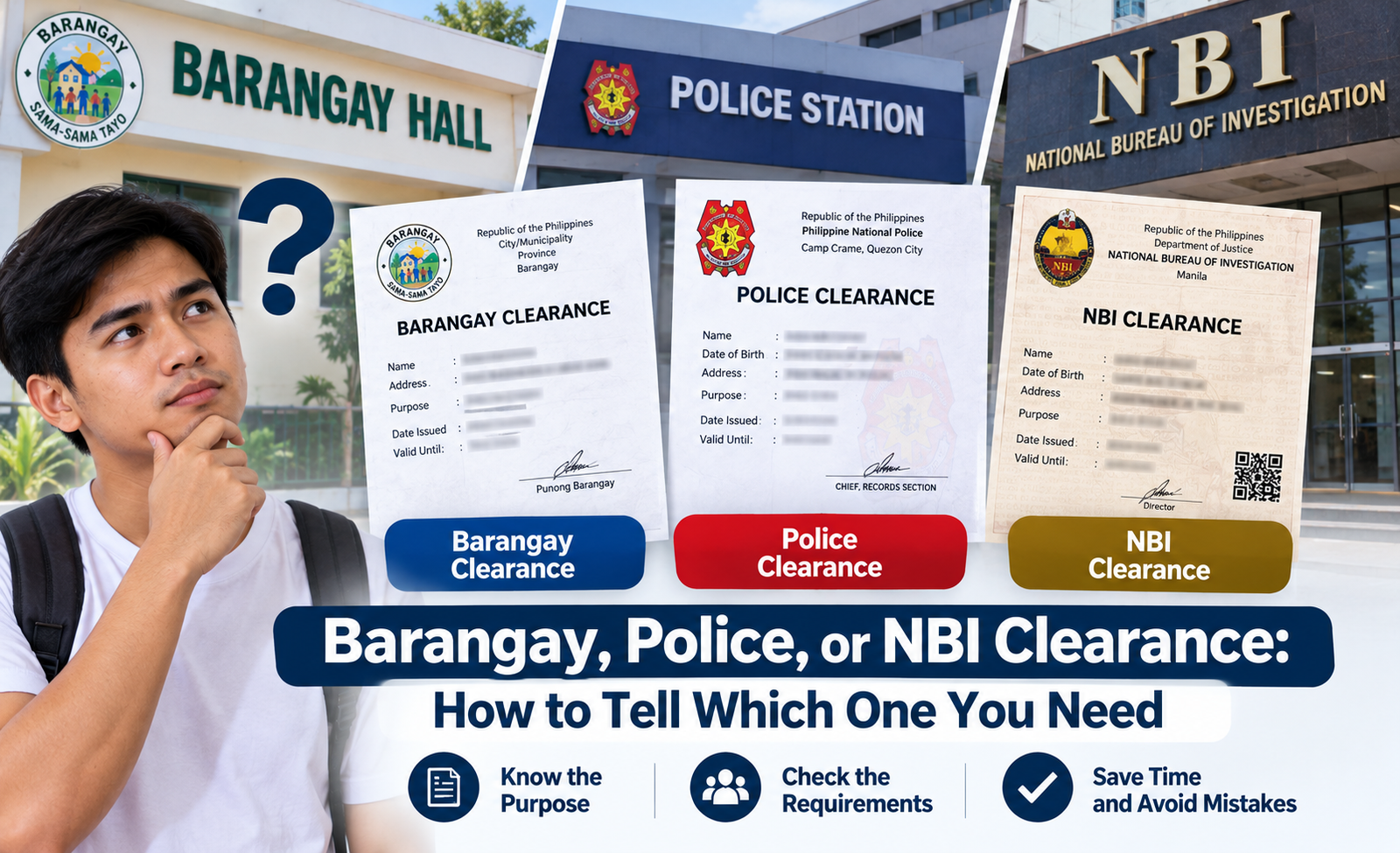
Police Clearance vs NBI Clearance vs Barangay Clearance : “what each clearance costs and covers”
Typical Fee Ranges in 2026 and What Makes One Legitimate
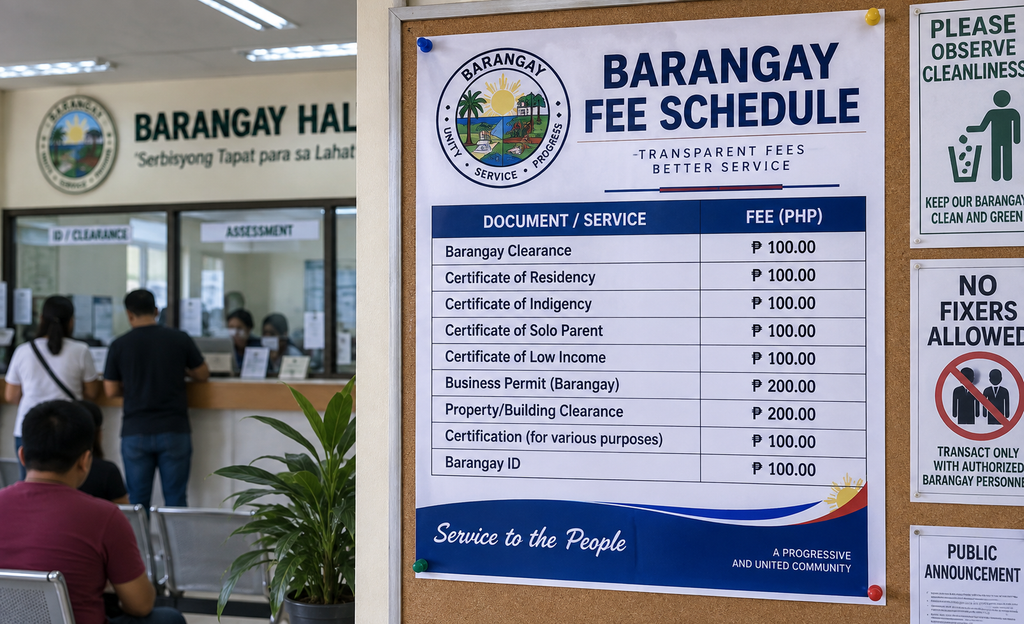
A legitimate fee has a posted schedule, a fixed amount, and an official receipt. An illegitimate one shifts depending on who’s asking, gets called a “donation” or “pang-merienda,” and comes with no paperwork. The peso amount matters less than whether it’s backed by an actual barangay ordinance.
According to Respicio & Co.’s 2026 breakdown of official barangay fees, a charge is considered legitimate only when it has a stated legal basis, a fixed and non-negotiable amount, proper receipting, and a posted fee schedule a checklist most residents never think to ask for.
| Option | Best For | Key Benefit | Limitation |
|---|---|---|---|
| Personal/employment fee (₱20-100) | Everyday residents requesting clearance for a job or personal transaction | Cheapest category, usually fast to process | Still requires a current cedula on top of this fee |
| Business fee (₱100-1,000+) | Business owners applying for a permit | Scales with declared capital, so small stores pay less | Highly inconsistent between barangays same business, different price |
| Fee waiver (₱0) | First-time jobseekers under RA 11261, sometimes indigent residents | Completely free, no cedula cost in some barangays | Only for qualified applicants, and often one-time |
How to Tell If You’re Being Overcharged
- Ask for the fee schedule or ordinance the barangay is charging under.
- Confirm the amount matches what’s posted, not what the staff quotes verbally.
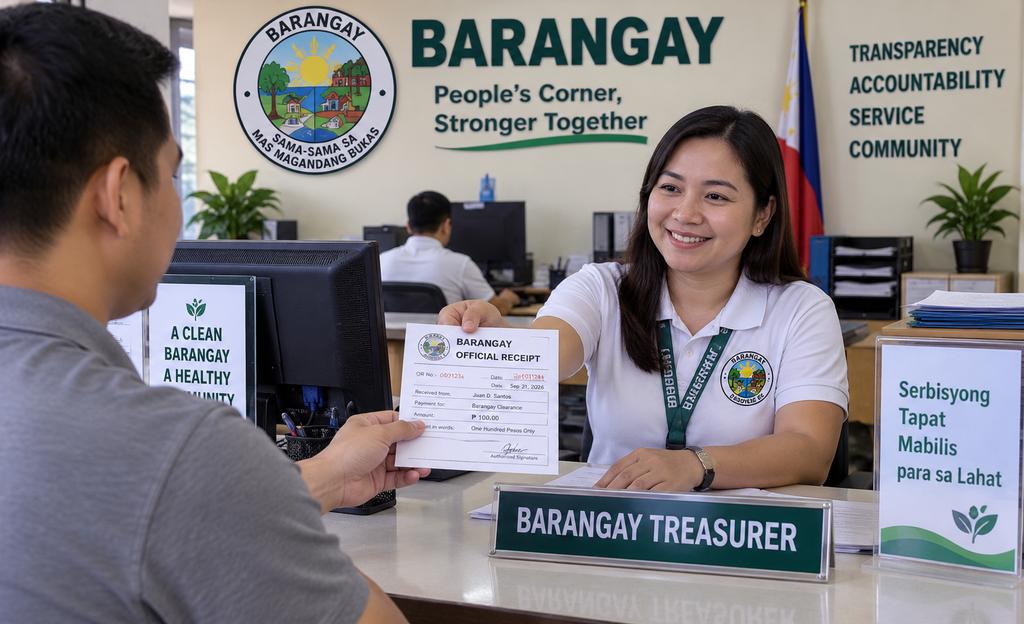
- Pay only at the treasurer’s counter or an authorized collector.
- Get an official receipt before you leave no receipt is a red flag.
- Report mismatched or undocumented charges to your city or municipal government.
Signs the charge isn’t official
Here’s the thing: if the amount changes depending on who’s processing your request, or you’re told it’s a “pang-gasolina” or “pang-activity” contribution rather than a fee, that’s not a legitimate charge no matter how small it is.
Signs the charge is fine
A fixed number posted at the counter, a receipt with your name and the amount, and payment made directly to the treasurer or an authorized collector that’s the normal, legal version of the transaction.
Who Gets a Discount or Free Clearance
Qualified first-time jobseekers get their barangay clearance free under RA 11261, provided they sign the required Oath of Undertaking. Some barangays extend similar waivers to indigent residents on a case-by-case basis, though this isn’t guaranteed nationwide it depends entirely on your barangay’s own ordinance.
I’ll admit the picture here is a little murky: some guides describe student and senior discounts as standard practice, others frame them as occasional courtesy. My read is that these aren’t legal entitlements the way the RA 11261 waiver is they’re local goodwill, so ask rather than assume one applies to you.
What to Do If a Fee Seems Wrong
Start by asking politely for the posted fee schedule and an official receipt. If the barangay can’t produce either, or the clearance is withheld unless you pay something unrelated, that’s worth escalating. Complaints about elective barangay officials typically go to the city or municipal government supervising that barangay the Sangguniang Panlungsod or Bayan.
For unposted costs, refused applications, or missing receipts specifically, the Anti-Red Tape Authority runs an electronic complaint system built for exactly this kind of issue. Keep your receipt, correspondence, and any written refusal you’ll want them on hand if you escalate.
Respicio & Co., Official Fees for Barangay Clearance Issuance → defines what makes a fee legitimate and where to file a complaint
Quick Answers to Common Questions
Is there a standard barangay clearance fee in the Philippines?
No. Each barangay sets its own fee through a local ordinance, so the amount varies by city, municipality, and even barangay.
How much does a barangay clearance usually cost?
Personal or employment clearances typically run ₱20 to ₱100, while business clearances often start at ₱100 and scale up with declared capital.
Can I get a barangay clearance for free?
Yes, if you qualify as a first-time jobseeker under RA 11261, and some barangays also waive fees for indigent residents.
What if the barangay asks for more than the posted fee?
That’s a red flag. Ask for a receipt, and if none is given, you can report it to your city or municipal government.
Is a cedula the same as the barangay clearance fee?
No. The cedula is a separate document you usually need before the clearance is even issued, priced by your prior-year income.
Before You Pay
This covers the general legal framework the exact peso amount, and which discounts apply, still comes down to your specific barangay’s ordinance. It’s built for someone checking whether a quoted fee is normal, not for resolving an existing dispute with barangay officials, which involves a separate escalation process.