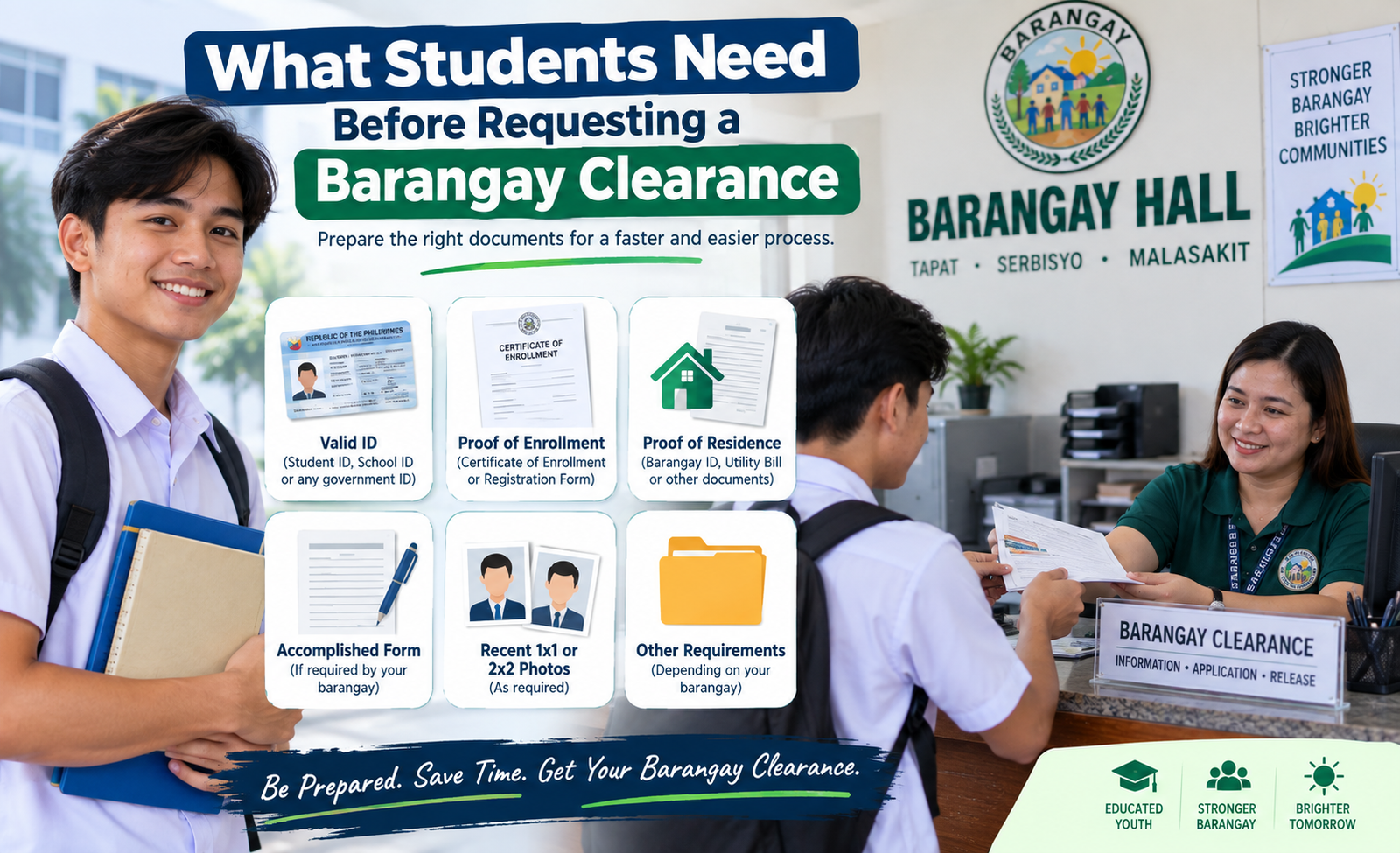
What Students Need Before Requesting a Barangay Clearance
A student barangay clearance is the same official document adults request, but issued using a school ID and, if you’re under 18, a parent or guardian’s valid ID instead of your own. It proves residency and good standing for school forms, scholarships, or your first part-time job.
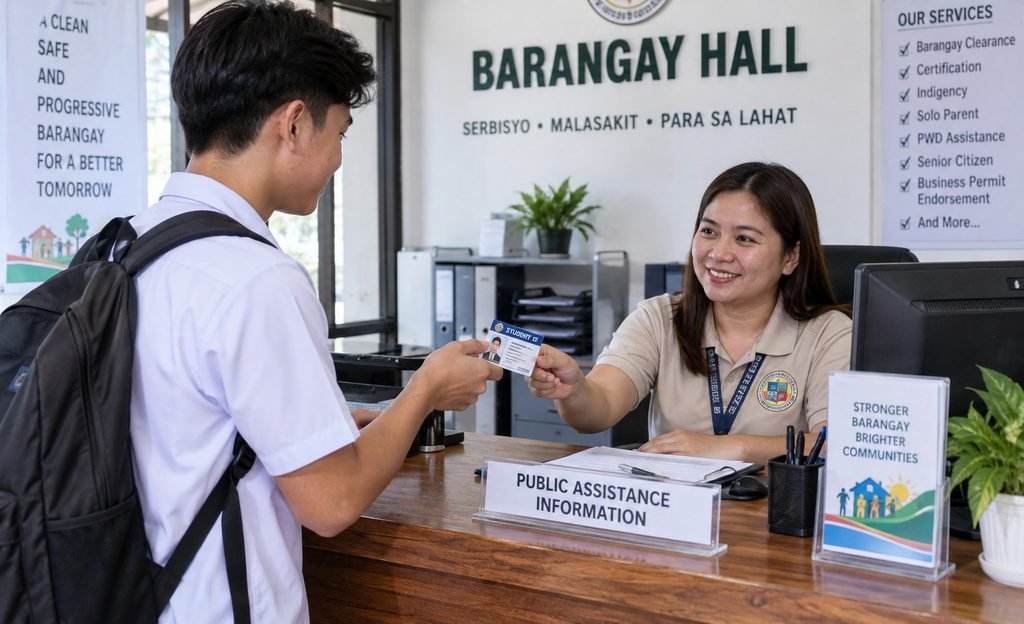
You don’t need a driver’s license or a passport to walk in and ask for one most barangays are used to students showing up with nothing but a school ID and a parent trailing behind them.
What Counts as a “Student” Barangay Clearance Request
The document itself doesn’t change. What changes is which ID you bring and, in some cases, who has to come with you.
According to Salmon.ph’s 2026 guide on barangay documents, a valid government ID showing your barangay address is the main requirement for any clearance request, but barangays commonly accept a school ID from students who don’t have one yet, paired with proof that they actually live in the area.
A 2026 guide on barangayclearance.com notes that students without a government ID may present a school ID together with a parent or guardian’s valid ID if they’re a minor, and that many barangays already offer discounted or waived fees for students — a detail most generic guides skip.
If you’re 18 or older and already hold a national ID, voter’s ID, or postal ID, you can usually apply exactly the way an adult would. It’s the under-18 crowd where the process bends a little.
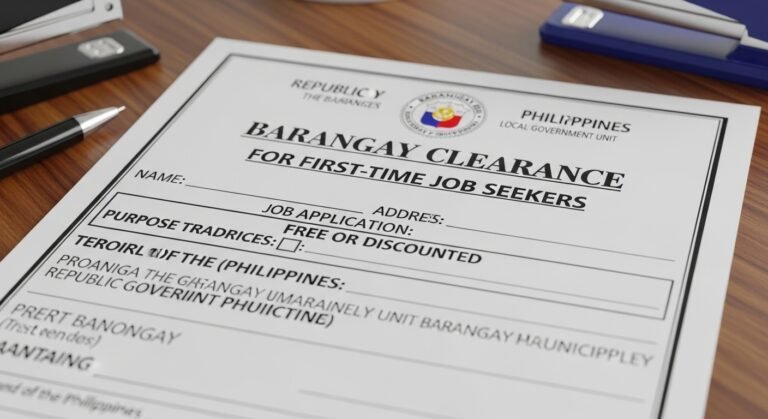
Barangay Clearance Requirements for First-Time Job Seekers : first job or OJT with pay
Barangay Clearance vs. Barangay Certificate: Which One Does Your School Actually Want
A Barangay Clearance is the general, all-purpose version it just confirms residency and good standing, valid for about six months. A Barangay Certificate is narrower: it states one specific fact, like indigency or first-time jobseeker status, and schools usually ask for whichever one their form names, not the other.
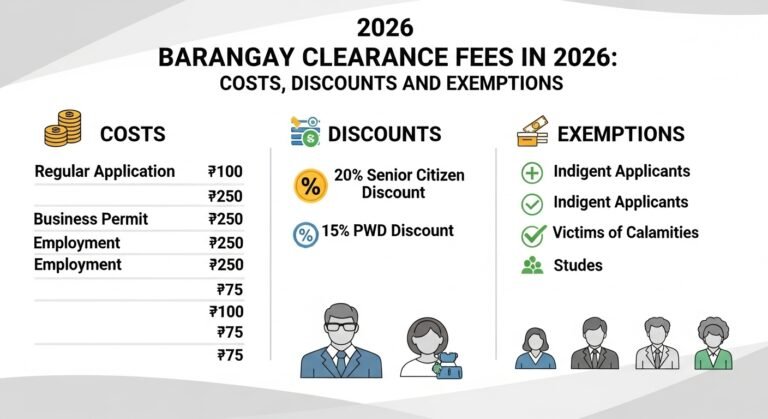
According to Salmon.ph, the Community Tax Certificate almost every barangay requires before releasing a clearance costs a ₱5 base tax plus ₱1 for every ₱1,000 earned the previous year which means a student with no income typically pays only the ₱5 minimum, a fact tuition-and-fees articles rarely mention.
| Option | Best For | Key Benefit | Limitation |
|---|---|---|---|
| Barangay Clearance (general) | Enrollment, org membership, general school forms | Covers most everyday school paperwork | Usually needs a small fee plus a current cedula |
| Barangay Certificate (purpose-specific) | Scholarship applications, indigency proof | States the exact fact your scholarship provider asks for | Only valid for the purpose written on it |
| Barangay Certification for First-Time Jobseekers (RA 11261) | A student about to take a first paid job or OJT | Waives fees on NBI and other pre-employment clearances | Only for genuine first-timers, one-time use |
Here’s the thing: if your scholarship form says “certificate of indigency” and you hand over a plain clearance, expect a second trip. Read the form’s exact wording before you queue.
What to Bring and What Changes If You’re a Minor
- Go to the barangay hall where you (or your family) live.
- Bring your school ID plus one government ID yours if you’re 18+, a parent’s or guardian’s if you’re a minor.
- Fill out the request form and state your purpose (enrollment, scholarship, OJT, etc.).
- Pay the cedula and clearance fee ask if a student discount applies.
- Wait 10–30 minutes for the signed clearance.
If you’re under 18
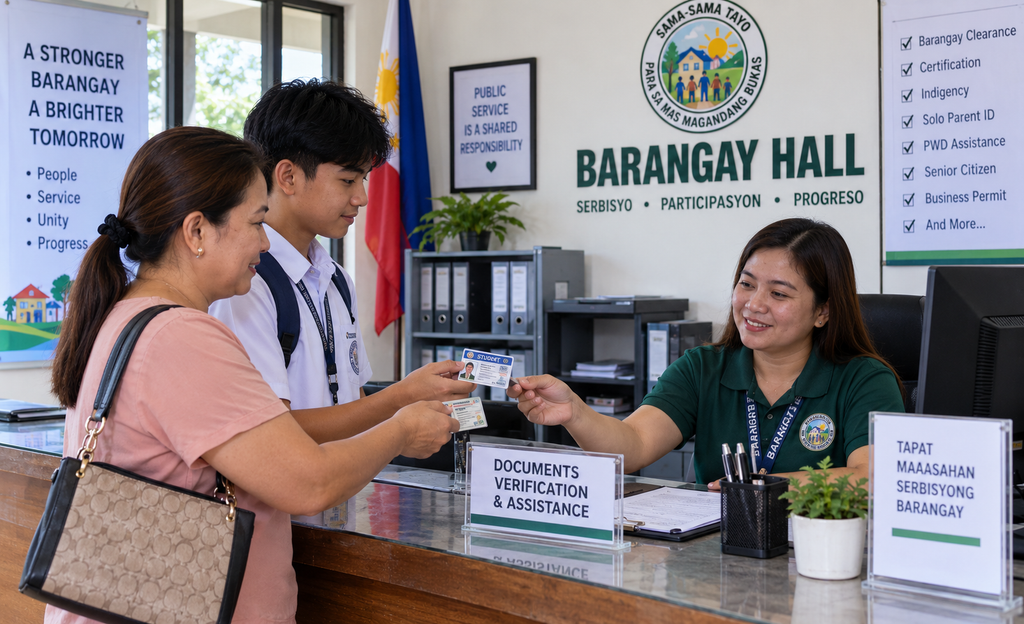
Bring your school ID and, if you have one, your own government-issued ID a Philippine National ID or a school-issued PhilSys ID both work. Then bring a parent’s or guardian’s valid ID as backup identification. Most barangays don’t require the parent to physically stand at the counter with you, though a few smaller barangays still prefer it. Ask when you call ahead.
If you’re 18 or older
You’re treated like any adult applicant. A voter’s ID, national ID, or even a postal ID showing your barangay address is enough, and you won’t need a guardian’s ID at all.
Common Mistakes Students Make at the Barangay Hall
Assuming a school ID always works alone
It usually does for the clearance itself, but some barangays still ask for a second ID or proof of address if your school ID has no expiration date or photo. Bring a backup just in case.
Skipping the cedula
Many barangays won’t even print your clearance without a current-year cedula in hand. Getting it first from the treasurer’s counter, then queuing for the clearance, saves a second trip and at ₱5 for a student with no income, it’s not worth forgetting over.
Writing the wrong purpose on the form
“For school” is too vague if what you actually need is a certificate of indigency for a scholarship board. Write the exact purpose from your school’s request letter, word for word if you can.
I’ll admit there’s some disagreement here: a few guides claim any barangay ID substitutes for a full clearance in a pinch, others say schools always want the dated, purpose-stated document. My take don’t gamble on it; call the barangay or check its Facebook page first, since fee-waiver policies for students vary by barangay under Republic Act 7160 (the Local Government Code of 1991), which lets each barangay set its own fees by ordinance.
Quick Answers to Common Questions
Can I get a barangay clearance if I don’t have a valid ID yet?
Yes. Most barangays accept a school ID for students, though if you’re under 18 you’ll usually need to bring a parent or guardian’s valid ID as well.
How much does a barangay clearance cost for a student?
It varies by barangay, but expect the cedula’s ₱5 minimum plus a small clearance fee — some barangays waive or discount fees for students entirely.
Do I need my parents with me to get a barangay clearance?
If you’re a minor, most barangays ask for a parent or guardian’s ID, though they don’t always need to be physically present at the counter.
Is a barangay clearance the same as a barangay certificate for scholarships?
Not always. Scholarship forms often specify which one they want, so check the exact wording before requesting either document.
How long is a student’s barangay clearance valid?
Typically around six months from issuance, though some schools or scholarship providers ask for one dated within the last one to three months.
Before You Go
This covers the general student case exact fees, discount policies, and whether a guardian must be present in person still vary by barangay, since the Local Government Code leaves those calls to each barangay council. It’s built for students requesting a clearance for school, scholarship, or membership purposes. If you’re a student about to start your first paid job or OJT, the RA 11261 process for first-time jobseekers is the more relevant path.
Local Government Code of 1991, Sections 152 and 156-164: establishes barangay fee-setting authority and the community tax certificate requirement